

Published: 09/30/2026
By Jamie Hansen, Global Health Communications Manager
In college, Steve Luby bought a defunct 1973 Chevy Nova for $160, confident that he could get it running again as an amateur mechanic. He tried some simple fixes such as charging the battery and ruling out a problem with the electrical system before deciding that the issue must lie with the fuel system. He invested hours of time and money on this theory. After replacing the carburetor he suspected as the culprit, the car still would not start. For Luby, a philosophy student, this experience was an eye-opener.
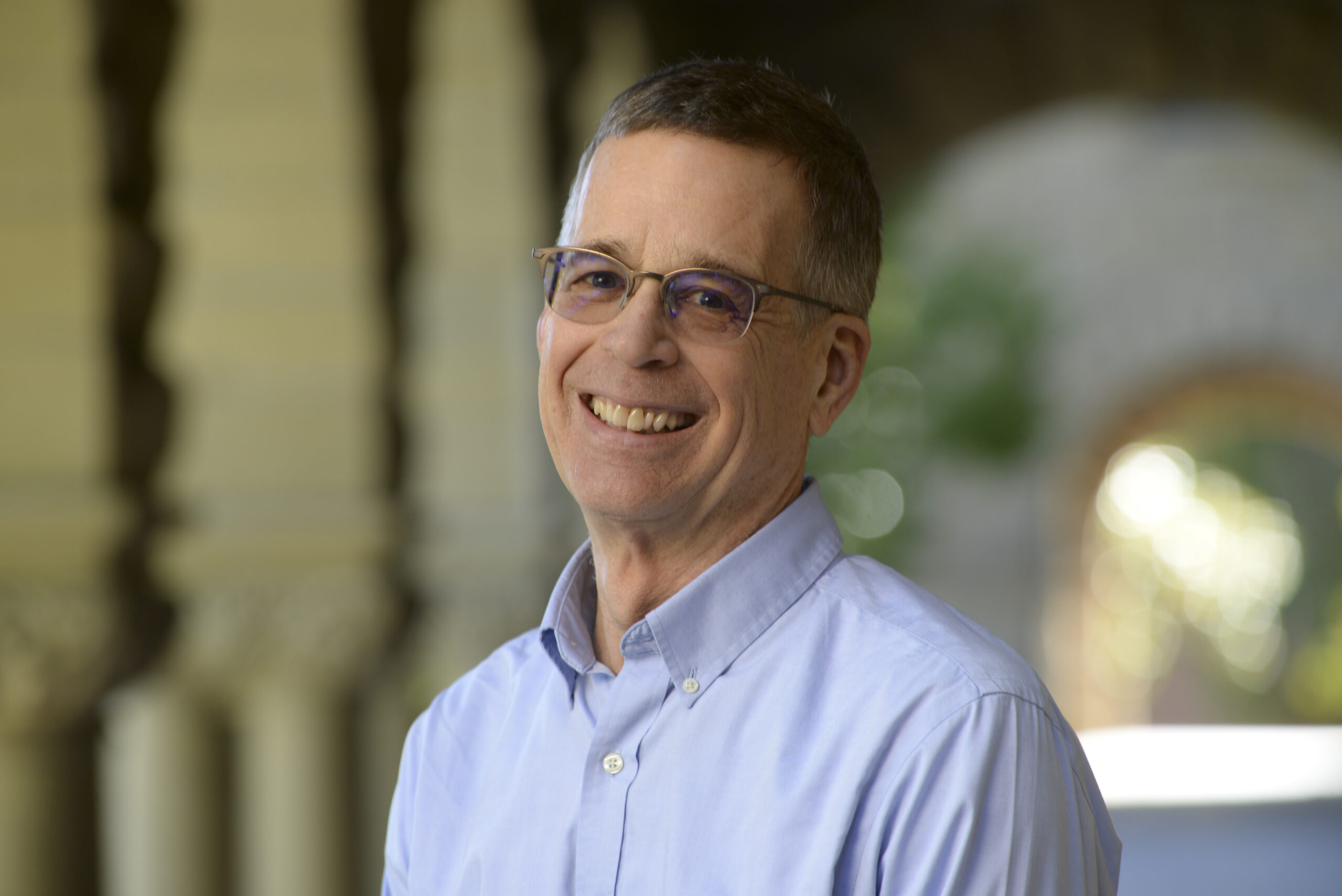
“Unlike in my university classrooms, where in the face of a counterargument, I could double down and come up with more reasons to defend my view of the world, if I wanted my car to start, I needed to accept my unambiguous failure,” he reflects in his new book, Theories of Change in Global Health. “I needed a new hypothesis. I needed a new theory of change.”
Four decades later, Luby is still thinking about how to fix broken systems. Now, however, as a physician, educator, and researcher based in Stanford’s schools of medicine and sustainability, he focuses on far more complex health systems affecting millions of people. In Bangladesh, for instance, he and his colleagues have reduced a leading cause of air pollution and virtually eliminated a key source of lead poisoning.
“My time as a backyard mechanic actually underlies my broad approach to thinking about situations in the world, why events are unfolding in a certain way, and where we might intervene,” he said.
From fuel systems to health systems
Luby became a doctor and worked for the Centers for Disease Control and Prevention (CDC) before joining Aga Khan University in Pakistan as an epidemiology professor. That position, and later work with the International Centre for Diarrhoeal Disease Research, Bangladesh (icddr,b), shaped his thinking about theories of change.
In Pakistan, a conversation with a World Bank economist who justified investing in road-building projects simply because “economists believe in roads” revealed to Luby that beliefs and priorities are often shaped by a person’s socialization rather than an objective assessment of the problem. This approach, and others like it, struck Luby as “far too narrow.”
So when his research in Bangladesh linked air pollution to pneumonia (the leading cause of child death), Luby didn’t assume he knew the solution. Digging deeper, his team was shocked to find that 40% of the country’s particulate air pollution during winter came from kilns baking bricks for local buildings.

There were a relatively small number of kilns compared with other sources of pollution, and this disproportionate impact led Luby to suspect “that this problem was potentially solvable if we really worked to understand it.”
Decades of efforts to regulate the kilns had largely failed, and operators were frequently portrayed as villains unwilling to stop polluting. When Luby’s team sent anthropologists to build trust and understand their incentives, they found that many kiln owners wanted to reduce pollution, but cleaner methods were simply too difficult and costly to adopt.
Understanding this enabled Luby and his team to discard “better regulations” as a theory of change and instead work with kiln owners to design cleaner manufacturing processes.
Stanford students sharpen Luby’s theories of change
Lessons from initiatives like these were percolating in Luby’s mind when he joined Stanford in 2012, eager to explore theories of change in an academic context.
“I saw people talk past each other all the time, running around with different theories of change but never having a conversation about why one is better than another,” he recalled.
PUBPOL 291: “Theories of Change in Global Health,” taught from 2016 to 2025, became a popular seminar in which Luby and his students examined real-world global health projects through the lens of various theories of change, such as health systems strengthening and behavior change. They debated which succeeded, which failed, and why.
“It was just so outstanding and fertile because students were constantly critiquing the whole framework and contributing case studies based on their own lives,” he recalled. “Theories were renamed, jettisoned, and added.”
Luby had assumed failures would be the most useful teaching tool. The class revealed the opposite.
“Students came in wanting to do something meaningful with their lives, but couldn’t figure out how to do it,” Luby said, adding that many were demoralized by news about polarization and systems controlled by powerful people. “They hadn’t heard about the successes, such as smallpox eradication—one of humanity’s greatest achievements, and so these were really useful and motivating.”
A book takes shape and provides new insights
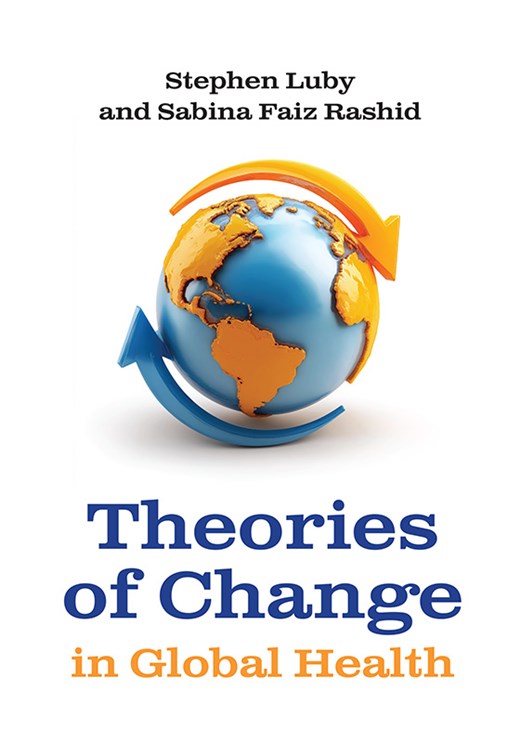
A couple years into teaching the course, Luby began crafting a book based on the readings and discussions. To broaden the book’s perspective, Luby invited Sabina Rashid, PhD, a professor at BRAC University in Dhaka, Bangladesh, to co-author it. A respected anthropologist focused on poverty, particularly among women, her approach complemented his as a medical epidemiologist.
He was frequently surprised: theories he expected to succeed turned out to be failures, and vice versa. He examined road building as a path to better health through economic growth and found that while roads have led to improvements like access to life-saving care for women in labor, they have also devastated Indigenous communities through deforestation and increased disease risk. Expecting a success, Luby ultimately classified it a failure.
He hopes the book will contain similar revelations for readers such as students, health officials, and donors, sparking conversations about the most effective ways to approach complex health problems.
A better-informed approach
Teaching and writing about theories of change has sharpened Luby’s focus on carefully targeted health initiatives. In Bangladesh, his 15-year effort to understand the barriers to cleaner brick kilns has produced strikingly simple innovations. In a 2025 study, his team showed that low-cost changes in kiln operation reduce energy use and emissions while saving operators fuel costs and improving brick quality. Sixty-five percent of participating kilns adopted the changes, cutting their emissions by about 20%.

And the Chevy Nova? It had an electrical problem after all, one so subtle a professional mechanic had to diagnose it. What stays with Luby isn’t so much the fix as the unnecessary detour his faulty theory of change sent him on, and a desire to avoid similar detours when the stakes are higher.
“This framework has helped time and again when we look at problems that are seemingly intractable,” Luby said. “One of the reasons they’re intractable is that people keep trying the same approach that has failed. And that suggests to me that we need a different theory of change.”
A note on affiliation
Steve Luby, MD, is the director of the Stanford Center for Human and Planetary Health and research director for the Stanford Center for Innovation in Global Health. He’s also Lucy Becker Professor of Medicine and professor, by courtesy, of Epidemiology and Population Health, as well as being a senior fellow at the Woods Institute for the Environment and Freeman Spogli Institute for International Studies.